

Writer's Room

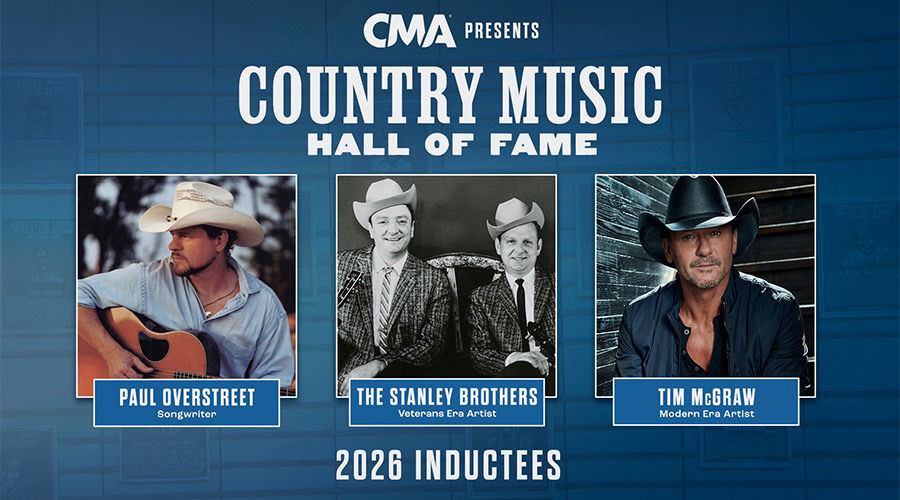
Another Hall Of Fame For The Stanley Brothers
With this spring’s announcement of a new class of honorees in Nashville, the Stanley Brothers took their place among legendary acts selected to both the Country Music Hall of Fame and the Bluegrass Hall of fame. They were selected to the Bluegrass Hall’s second class of honorees in 1992.

“Hailing from mountainous southwestern Virginia, the Stanley Brothers—Ralph and Carter—were a foundational act in Bluegrass whose music has influenced generations of artists in a variety of genres,” said Kyle Young, CEO of the Country Music Hall of Fame and Museum. “Now, they will permanently be enshrined in the Country Music Hall of Fame alongside their esteemed peers and fellow pioneers.”
Other honorees in both Halls of Fame include Bill Monroe, Lester Flatt and Earl Scruggs, Mac Wiseman, and the Carter Family. While the Carter Family’s recognition at the Bluegrass Hall focuses on A.P., Sara and Maybelle, their plaque mentions the later line-up that included June Carter Cash, who was selected to the Country Music Hall of Fame in 2025.
“Testament To A Legacy”
John Lawless, editor of Bluegrass Today, put the contributions of several of these pioneers in perspective: “It is often said that Bill Monroe invented the Bluegrass style and gave it its instrumentation, then Flatt and Scruggs brought it to the wider audience, while The Stanley Brothers gave it its soul,” he said.
Ralph Stanley II and his sister Lisa Stanley Marshall and Jeanie Stanley, Carter’s daughter, represented their late parents at the Hall of Fame ceremony. “This moment is deeply personal for our entire family,” they said in a statement responding to the announcement.
“Seeing Ralph and Carter – The Stanley Brothers – inducted into the Country Music Hall of Fame is an extraordinary honor, and something we know would have meant so much to them. The fact that people around the world still love their music speaks to the heart and soul they poured into every recording and performance.”
“Carter’s emotional lead combined with Ralph’s haunting tenor created a sound that was truly special. After Carter’s passing, Ralph carried on the music they began together, dedicating his life to preserving the spirit of traditional mountain music and sharing it with audiences everywhere through the Clinch Mountain Boys before his passing in 2016.
“To see The Stanley Brothers recognized together, side by side, is incredibly meaningful for our family and a testament to a legacy that continues to live on through their music.”
That “Old-Time Mountain Sound”
Ralph and Carter grew up in a musical family, learning harmonies as their father sang mountain ballads and hymns and their mother played the banjo. The radio expanded their musical horizons, bringing the sounds of the Grand Ole Opry and other talented entertainers.
The Stanleys formed the Clinch Mountain Boys band in 1946, with Carter singing lead and playing guitar and Ralph on banjo and high tenor harmonies. What they described as that “old-time mountain sound” found a home base on radio at WCYB-AM in Bristol, Virginia, and later at the Suwannee River Jamboree in Live Oak, Florida, and on syndicated television shows.
The brothers’ recording career began in 1947 on the Rich-R-Tone label, continuing with Columbia, Mercury, Starday, King, and Rebel Records. Among their signature songs were “White Dove,” “Little Maggie,” “Mountain Dew,” “Rank Stranger,” “Man of Constant Sorrow,” and “Angel Band.”
In 1959, the Stanley Brothers became the first Bluegrass band invited to play at the Newport Folk Festival. That performance gained new fans and showcased the “mountain sound” in the 1960s folk revival. The Stanleys appeared on network television shows, including ABC-TV’s popular “Hootenanny” broadcast from college campuses.
When Carter Stanley died at age 41 in 1966, Ralph continued to tour and record with the Clinch Mountain Boys. Just as Carter had served a stint with Bill Monroe’s Bluegrass Boys, Ralph mentored many young Bluegrass musicians over the next 50 years. Ricky Skaggs and Keith Whitley are among the best-known alumni of the Clinch Mountain Boys, and in 1995 Ralph Stanley II joined the group he now leads.
In his mid-70s, Ralph Sr. entertained everything except thoughts of slowing down. He was introduced to yet another generation of new fans through the Coen Brothers 2000 film, “O Brother, Where Art Thou?” The soundtrack album, which included several new versions of Stanley standards and Ralph’s own performance of “O Death,” won the CMA Award and Grammy for Album of the Year.
At the age of 75, Ralph won the 2002 Grammy for Best Male Country Vocal Performance for his solo from “O Brother”. He followed that up a year later when “Lost In The Lonesome Pines” won the Grammy for Best Bluegrass Album. He also was nominated for Grammys in 2007, 2012, and 2016, the year he died at the age of 89.
More Bluegrass Ties in Country’s New Class
The other members of this year’s class of the Country Music Hall of Fame also can claim some Bluegrass ties. Songwriter Paul Overstreet’s hits include the classic “When You Say Nothing At All,” which topped the charts for Keith Whitley in 1988 and for Alison Krauss in 1995.
Four years later, the song also was #1 in the United Kingdom, Ireland, and New Zealand for Irish singer Ronan Keating. Overstreet’s Randy Travis standards—“Forever and Ever Amen” and “On The Other Hand”—and the writer’s own recording of “Seeing My Father In Me” are a few of his many other Country hits that have been covered by Bluegrass and Gospel artists.
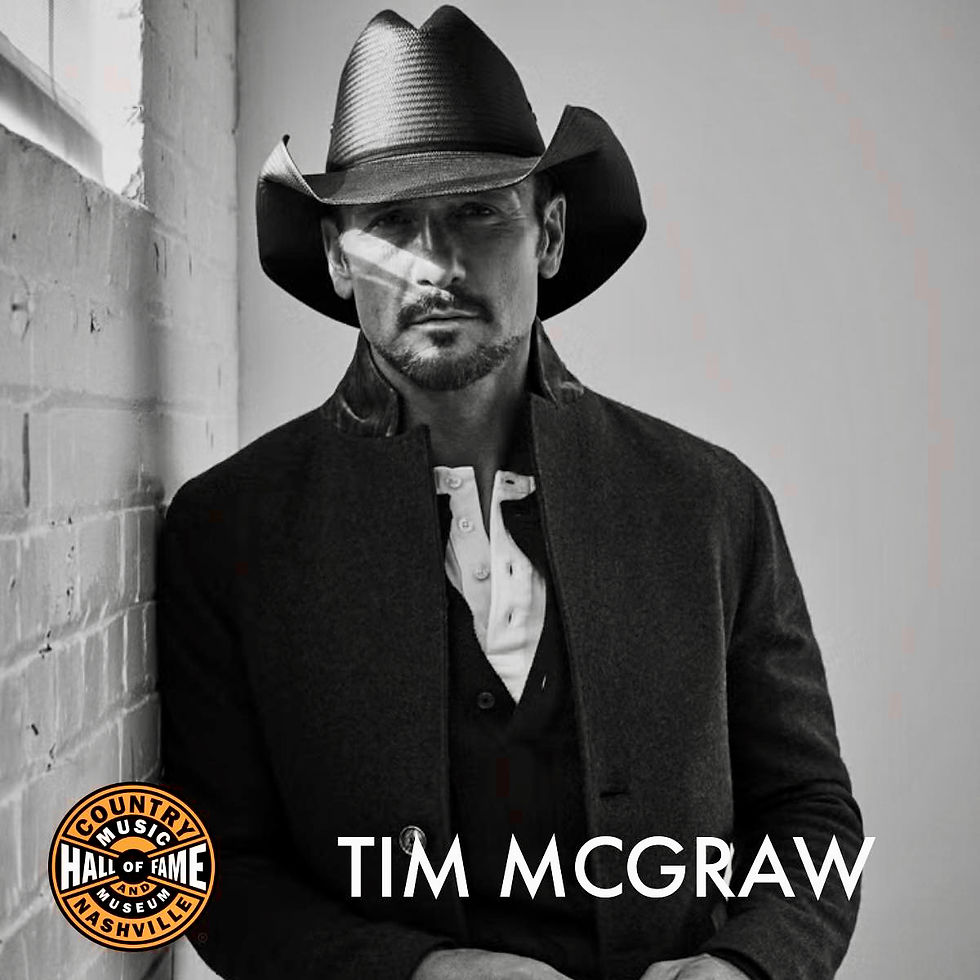
Tim McGraw, inducted in the Modern Era Artists category, isn’t generally known for recording Bluegrass tunes. But this year, McGraw joined Bob Minner (his long-time acoustic guitarist and Billy Blue Records recording artist) and Lori McKenna in their “Kentucky Bluebird” tribute to Keith Whitley. The song is on Minner’s album “Where The Mountain Meets The Moon.”


